Privacy
Create a more enclosed garden where the boundary allows.

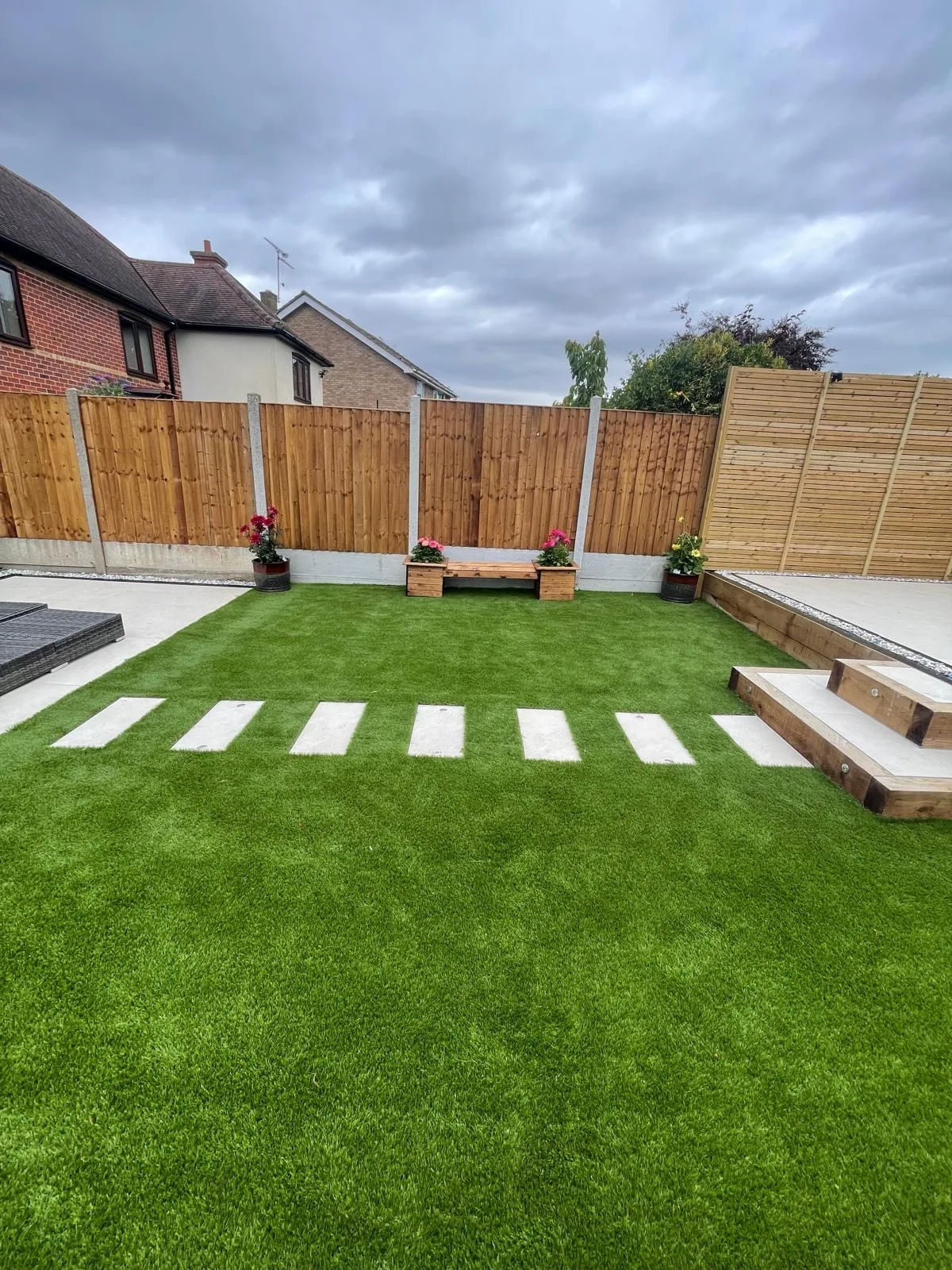
Garden fencing and boundary treatments that provide privacy, definition and a clean backdrop to the finished landscape.
Get a free consultation →Fencing is often the backdrop to the entire garden. The right boundary treatment can make a finished space feel cleaner, more private and more deliberate, especially when its colour and line work with the lawn, paving and planting.
Fencing affects privacy, enclosure and the backdrop behind everything else in the garden. When it is considered alongside the lawn, paving and planting, the boundary can become a strong visual part of the finished landscaping rather than something that simply sits around it.
Create a more enclosed garden where the boundary allows.
A consistent fence line can immediately make the rest of the garden feel more resolved.
Give lawns, paving and planting a clear visual frame.
Coordinate the boundary with the colours and lines used elsewhere in the garden.
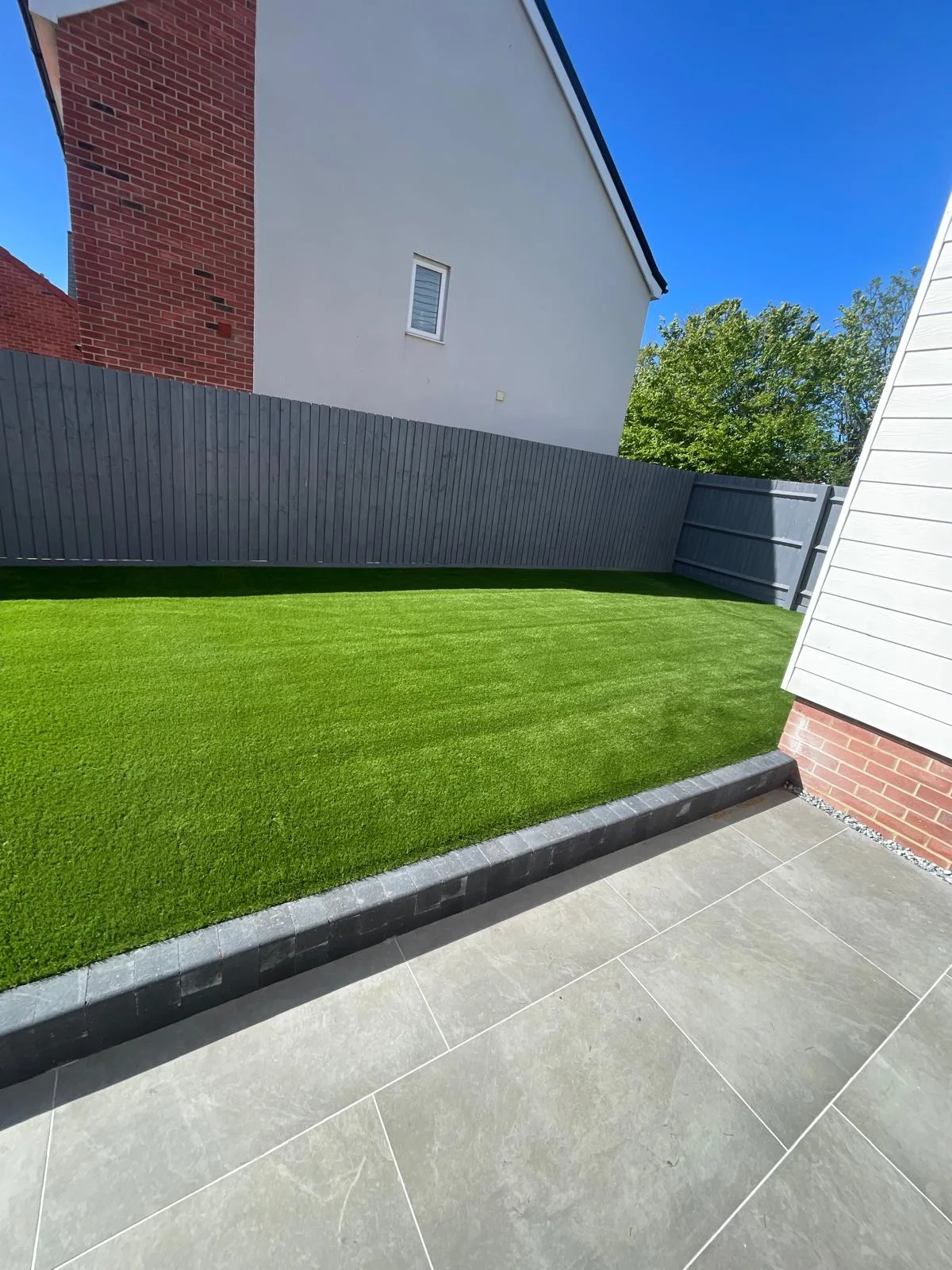
Every garden is different. These are the kinds of practical or visual issues this service can help address as part of a properly planned project.
Old or inconsistent boundary panels
Gardens that lack privacy or visual enclosure
Fence lines that distract from new landscaping
Awkward boundary changes around levels and corners
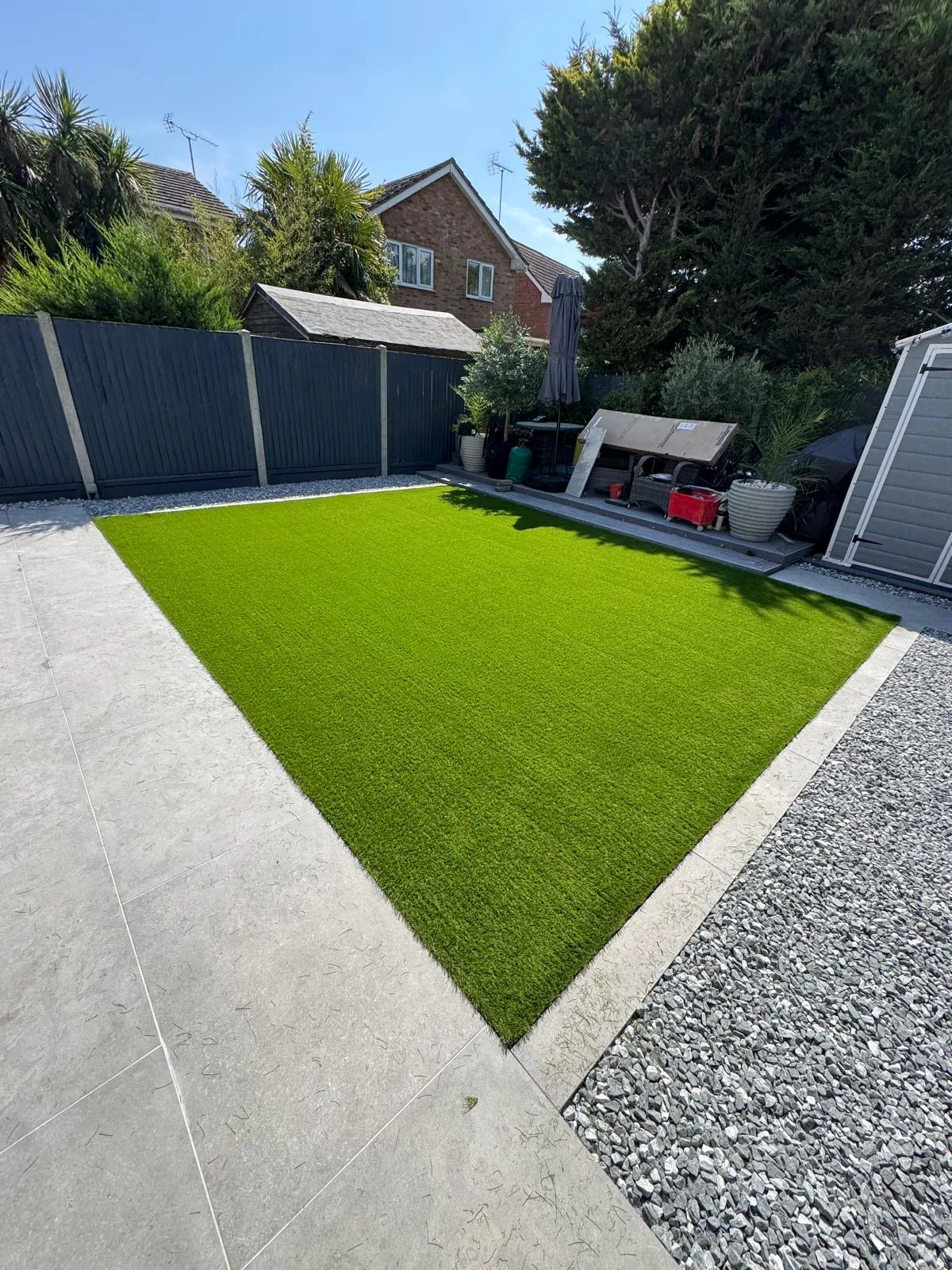
Real completed work provides the clearest view of how the finished landscaping sits alongside the surrounding garden, boundaries and property.
A darker finish can create a strong backdrop behind bright lawn and pale paving.
Timber can add warmth around planted or paved areas.
A consistent treatment around several sides can visually simplify the space.
Coordinate fencing with gravel strips and the lines of the patio or lawn.
We consider the existing line, privacy requirements and how the fence relates to the garden.
Posts, panels and corners are positioned to create a consistent boundary.
The fence line is finished alongside paving, lawns, gravel or raised features so the garden reads as one space.
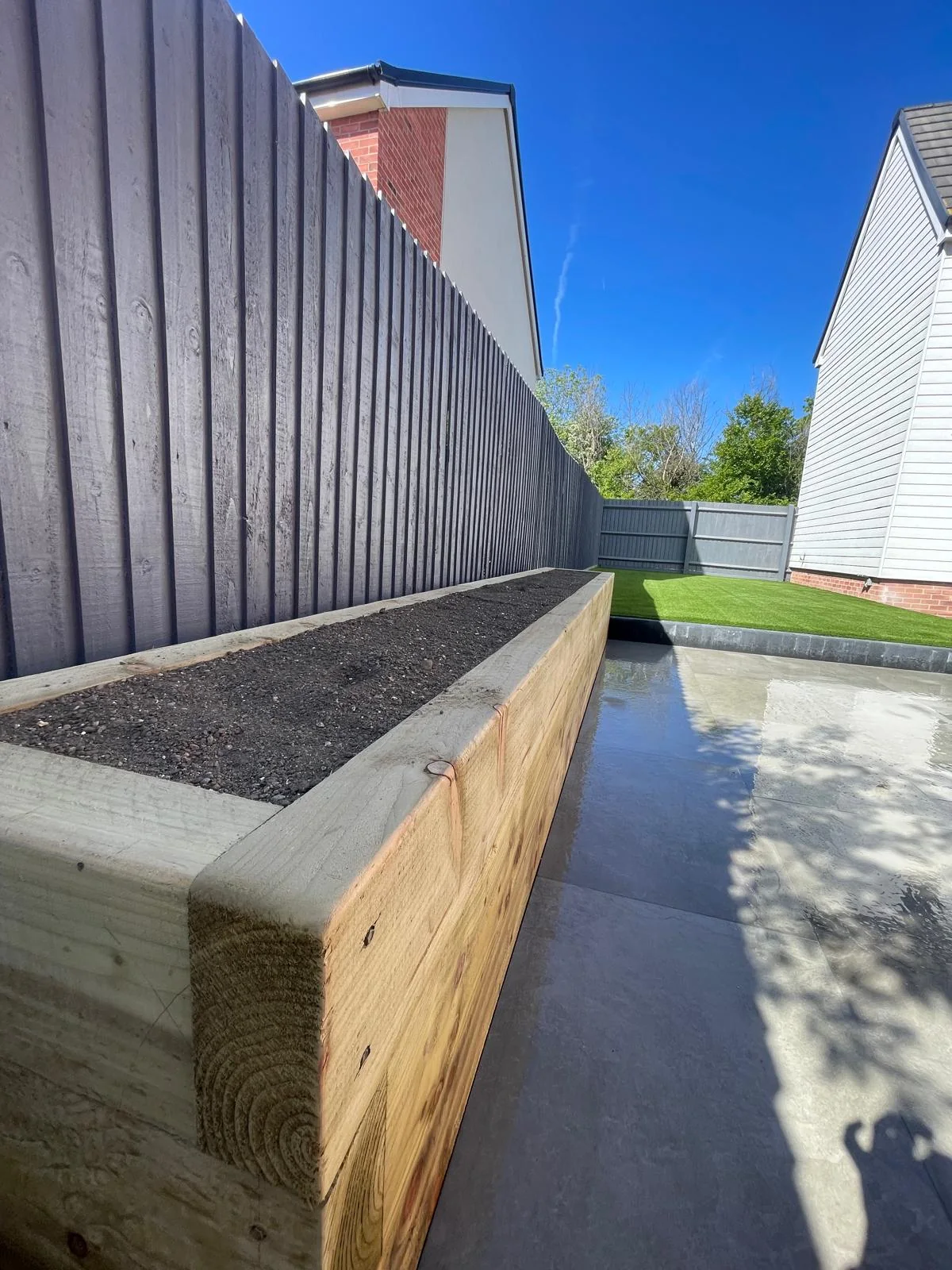
The visible result is only one part of the job. Set-out, preparation, levels, edges and the interfaces between materials all influence how complete the project feels.
Existing boundaries, corners, levels and access are considered before the new treatment is set out.
The fence is installed to create a consistent line across the relevant boundary.
Corners and changes in ground level are treated deliberately.
The fence line is finished alongside paving, gravel, lawns or raised features where these meet it.
Share the space, the problem and the result you have in mind.
We can establish the scope, priorities and relevant site considerations.
The proposed work is shaped around the garden and the finish you want.
The work is carried out with attention to preparation and visible details.
The different elements are brought together into a clean completed space.
These answers are intentionally general because the right approach depends on the individual property, ground conditions and project brief.
Have a different question? →Existing boundary fencing can be assessed for replacement as part of a fencing or wider landscaping project.
Yes. Several C&S Landscapes projects combine boundary treatment with lawns, paving and other landscaping.
The visual treatment can be discussed around the garden and the type of fencing being proposed.
Appropriate height depends on the property, boundary and any applicable planning rules. This should be confirmed for the specific project rather than assumed.
Changes in ground level can be considered when the boundary is set out; the correct solution depends on the site.
The junction between the boundary and surrounding surfaces can be planned as part of the installation.
Boundary and screening treatments can form part of a broader landscaping brief where appropriate.
Use the consultation form with a short description of the boundary and what you would like to change.
C&S Landscapes works on residential outdoor spaces across Essex and surrounding areas. If you are unsure whether your property is within the working area, send the postcode with your enquiry.
Tell us what you would like to change and we can discuss the right next step for your garden.